
Add Row
Add Element
Pennsylvania Daily LIfe
update
Mike Sweeney
update
Add Element
  • Home
  • Categories
    • Wellness
    • Travel
    • Lifestyle
    • News
    • Health
    • Pennsylvania News
    • Financial
    • Home Living
    • Featured
April 14.2025
3 Minutes Read

Why Your Top Tax Rate Isn’t What You Actually Pay: Unpacking It

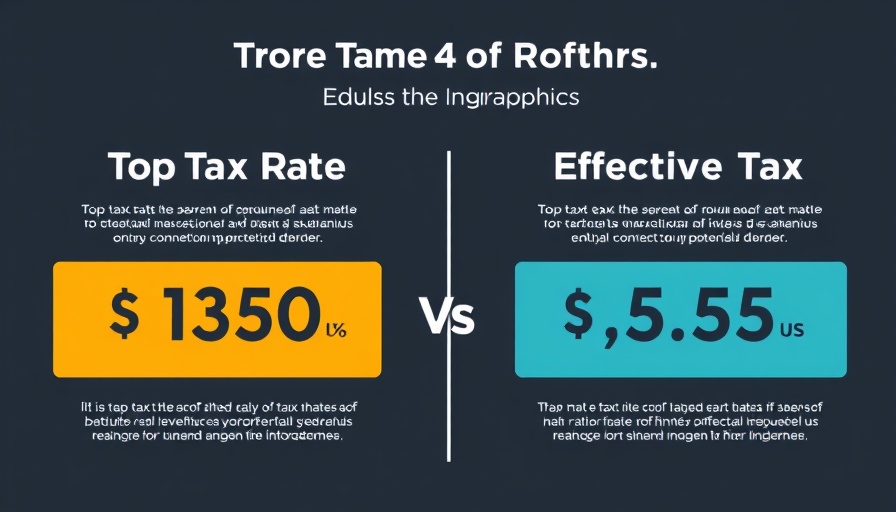
Infographic comparing Top Tax Rate vs. Effective Tax Rate

The Common Misconception About Tax Rates

Many people believe that their top tax rate—the percentage that applies to their last dollar earned—is the effective rate they actually pay. This is a misunderstanding that can impact financial planning, particularly for those approaching retirement or contemplating investments. In reality, your effective tax rate, which is the average rate of tax you pay across all your income, is usually lower than your top tax rate.

Understanding Tax Brackets: What They Are

Tax brackets are the segments of income that are taxed at different rates. For instance, in the United States, the tax system is progressive; this means as your income increases, so does your tax rate. However, it’s important to note that you don’t pay the high rate on all your income, just the portion that falls into that bracket. This layered structure often leads to confusion, especially among those who are not well-versed in personal finance.

Your Effective Tax Rate Explained

The effective tax rate is calculated by dividing the total taxes paid by the total taxable income. This figure often turns out to be less than the top marginal rate, allowing for a more accurate picture of one's tax liability. For someone with a high income, understanding this difference can help in tax strategy planning. For instance, if your taxable income falls into the 24% tax bracket, that doesn’t mean all your income gets taxed at that rate.

Why Understanding This Matters for Financial Planning

The difference between your top tax rate and your effective rate can influence financial decisions significantly. For those planning for retirement or considering investment paths, grasping this concept can lead to better financial outcomes. Knowledge of your effective tax rate enables more strategic decision-making regarding Roth accounts, traditional IRAs, and tax-loss harvesting—all of which can substantially affect your savings and earnings in the long run.

How Tax Deductions and Credits Can Lower Your Burden

Another essential component of your tax picture is the impact of deductions and credits. Deductions reduce the amount of income subject to tax, while credits reduce the tax burden itself. Understanding how these work can help anyone minimize their overall liability and maximize available refunds. Knowing the difference can empower individuals to take actions such as itemizing deductions that may significantly lower their effective rate.

Future Predictions: What Changes Might Come?

Tax laws can change; potential reforms may alter both tax brackets and effective rates. This variability means it’s crucial for today’s taxpayers, particularly those eyeing retirement, to stay informed. Awareness of potential policy changes can provide insight into strategic financial planning, enabling individuals to adapt and optimize their financial status should laws shift.

Common Misconceptions about the Tax System

People often believe that one's tax bracket is the ultimate measure of how much they will pay in taxes. This myth can lead to frustration come tax time. Others often do not realize that capital gains and qualified dividends are usually taxed at lower rates than regular income. Clearing these misconceptions allows for a more informed approach to tax planning and investment strategies.

Real-Life Impacts: Stories from Individuals

Consider John and Mary, who recently retired. With an annual income of $80,000, they believed that they would be taxed at the 24% rate because this was their top marginal tax rate. However, after deductions, their effective tax rate turned out to be only 10%. This revelation helped them feel more comfortable withdrawing from their retirement accounts, ultimately improving their lifestyle choices and investments.

Actionable Insights for Better Tax Planning

To make the most of your tax return, it’s essential to:

  • Track all eligible deductions, including charitable contributions and medical expenses.
  • Consider working with a financial advisor to optimize tax strategies.
  • Utilize tax software to ensure all potential deductions are explored every tax season.

Conclusion: Knowing Your Rates Can Set You Free

Understanding the difference between your top tax rate and your effective tax rate is vital for empowering personal finance decisions. As individuals plan for retirement or investments, this knowledge enables more effective management of financial resources and strategic planning. If you're looking to refine your understanding of how taxes influence your financial decisions, it might be time to dig deeper and explore available resources to master these concepts.

Financial

1 Views

0 Comments

Write A Comment

*
*
Related Posts All Posts
12.15.2025

Unlocking Creativity: Why Employees with Disabilities Are Vital to Business Success

Update Understanding the Value of Employing Individuals with Disabilities In today’s competitive job market, understanding the unique contributions that employees with disabilities can bring to the workplace is crucial. Theo Braddy, a prominent advocate for disabled individuals, emphasizes that people with disabilities navigate environments not designed for them, which cultivates a distinct form of creativity and resourcefulness. He articulates that hiring disabled individuals not only enhances a company’s bottom line but also introduces diverse perspectives that invigorate workplace culture and innovation. Why Creativity Flourishes in Diverse Workplaces Braddy shared his insights during a recent talk at Capital Blue Cross, where he advocated for an inclusive approach that sees beyond the disabilities of potential employees. He asserts that individuals with disabilities not only contribute unique problem-solving skills but also foster greater productivity among their teammates. Statistical data supports this claim, showing that businesses embracing diversity and inclusion see significant increases in revenue and profitability. Specifically, companies recognized for outstanding disability inclusion report 1.6 times greater revenue and 2.6 times higher net income than those that do not prioritize these practices. The Importance of Inclusion Training Employers can implement several strategies to attract and retain talent from the disabled community. Braddy recommends prioritizing inclusion training—an essential step for all employees to engage with and understand the experiences of individuals with disabilities. By hosting workshops and events that foster discussion around disabilities and everyday life, companies can demystify the barriers faced by many, creating a more empathetic work environment. Steps Toward Creating an Inclusive Environment To cultivate a truly inclusive workplace, organizations need to take actionable steps: Develop Employee Resource Groups (ERGs): These groups can promote understanding and allyship for employees with disabilities, helping to drive a culture of acceptance. Engage with Local Disability Organizations: Collaborating with local groups fosters a community approach to disability awareness, and supports those looking for jobs while offering the company insights on best practices. Attend Disability-Focused Events: Participation in conferences centered around disability inclusion can empower organizations with fresh insights and networking opportunities to connect with potential hires. Fostering Psychological Safety Through Inclusion As organizations embrace individuals with disabilities, they simultaneously cultivate psychological safety across their teams. This inclusiveness not only aids employees with disabilities but fosters an environment where all members feel safe to express their ideas and take constructive risks. Research indicates that teams with high psychological safety are more innovative and collaborative. Inclusion goes beyond compliance—it's about creating a workplace culture where everyone feels they belong. Real-Life Impacts of Workplace Inclusion Several success stories illustrate the positive ripple effects stemming from diversity efforts. For example, a regional retailer reported enhanced team communication and innovation after hiring individuals with disabilities, who encouraged their peers to adapt tasks to exploit each person's strengths. As biases are dismantled through shared experiences, organizations benefit from enriched morale and improved productivity. Looking Ahead: The Future of Work is Inclusive The continued push for disability inclusion is shaping the future of work. As legislative requirements evolve, such as the European Union’s mandates on reporting disability inclusion practices, companies must adapt and leverage these changes to their advantage. By prioritizing inclusive hiring practices and creating workplaces that celebrate diversity, organizations place themselves at the forefront of innovation and success. The Bottom Line: Inclusion Enhances Business Success Ultimately, incorporating employees with disabilities is not just a step towards social responsibility; it's a business strategy that can lead to tangible growth and success. Companies that embrace such inclusion experience enhanced creativity, better problem-solving, and resilient workplace cultures. As Theo Braddy states, individuals with disabilities represent an untapped resource rich in creativity and determination—qualities that every employer should value. Feeling inspired to promote inclusion in your workplace? Reach out to local organizations and start your journey to fostering a diverse and supportive work environment!

12.15.2025

Readers’ Strategies for Preparing Partners to Manage Money After Death

Update Why Financial Preparedness Matters In an unpredictable world, ensuring our loved ones can navigate financial responsibilities after we pass away is crucial. For many, the thought of death is overwhelming, yet planning for it doesn’t have to be. Financial preparedness helps lessen emotional burdens and ensures that partners can manage financial matters smoothly during an already challenging time. Understanding the Common Struggles Many individuals may not be fully prepared to manage finances alone after the death of a partner. Research highlights that a significant number of spouses lack essential knowledge about bank accounts, investments, or even bill payments. This reality can lead to stress and confusion during what is already a painful period. Understanding these struggles can encourage proactive conversations. Creating a Financial Roadmap Together One effective way to prepare your partner for the financial landscape is by creating a financial roadmap together. This roadmap can include a summary of essential information like account details, insurance policies, and lists of assets. Involving partners in this process not only upgrades their understanding but also fosters open communication about finances. The Power of Clear Communication Discussing financial matters may seem daunting, but clear communication promotes transparency and builds trust. Setting aside time to share thoughts, expectations, and concerns about finances can aid partners in feeling secure and informed. This open dialogue helps strengthen the relationship and ensures both parties are equipped to tackle future challenges. Emotional Connections: Stories from Readers Readers have shared their experiences on preparing their partners for financial independence. One woman recounted how, after losing her husband, she was surprised by the many responsibilities that fell on her. By preparing well, couples can help ease the transition, enabling spouses to focus on healing rather than financial chaos. Tools That Make Management Easier Many readers have recommended practical tools such as budgeting apps and shared online documents for organizing financial information seamlessly. Using technology can simplify the management of finances, ensuring that partners have access to important information when needed. Tools like these can lead to greater peace of mind. Acting Now for a Future of Ease Ultimately, knowing that your partner can handle financial matters is essential for peace of mind. Proactive actions taken today can pave the way for smoother transitions tomorrow. Encourage your partner to engage with financial topics, examine shared financial goals, and set up a comprehensive plan. With the right preparations, managing finances post-loss can be a less daunting task. As you navigate these discussions, remember—the essence of financial management is not just numbers, but how these discussions enrich your relationship, build trust, and promote mutual understanding. Preparing for the future is about ensuring that love and understanding overshadow chaos during the storm of grief. Prepare Today for Tomorrow’s Peace Start the conversation, create that financial roadmap, and empower your partner to take charge. The time to act is now. You have the knowledge, and with a bit of conversation, you can ensure that your loved one is equipped for the journey ahead.

12.13.2025

Penn National Insurance CEO Robert Brandon's Retirement: What's Next For the Company?

Update Leadership Change: A New Chapter for Penn National InsurancePenn National Insurance is about to embark on a new chapter as current CEO Robert Brandon announces his retirement after over 30 years of dedicated service. With leadership shifting in early 2026, John Foster, who has been with the company since 2006, is set to take over the role.Brandon's journey with the company has been remarkable. Since joining as a property underwriting line manager in 1995, he has steadily climbed the corporate ladder, becoming president and CEO in 2020. Under his guidance, the company has navigated challenging waters, including the pandemic, and achieved significant milestones such as surpassing $1 billion in annual premiums.“I’ve always said Penn National Insurance is a special company because of the people,” Brandon shared. His commitment to steady leadership is acknowledged by many, including Steve Swanson, the chair of the board, who praised his efforts in bolstering the company during tough times. Brandon will leave Penn National in a robust position, equipped with an A.M. Best rating of A and a record surplus of $906.6 million.Meet John Foster: The New Leader with VisionJohn Foster, set to officially assume the CEO role on July 1, 2026, has impressive credentials. His leadership has previously resulted in the company's expansion into new states and enhancements in claims service, enhancing customer satisfaction. Foster has a clear vision of growth, focusing on the strong foundations that Brandon laid down while emphasizing the company’s commitment to relationships with employees and clients.John has a practical approach; he believes that valuing relationships is key to maintaining Penn National's successful model. As he prepares to take the helm, he emphasized that the company must embrace change while building on its past accomplishments.Randal Mancini: A Trusted SuccessorWith Foster's promotion, Randal Mancini will step into the senior vice president role over insurance operations. Mancini, who has been with Penn National for 25 years, is well-prepared to handle this transition, having extensive experience in commercial lines and underwriting.Mancini's presence in the executive leadership team is crucial as he carries the wealth of knowledge necessary for overseeing critical functions. His continued service will help ensure a seamless transition and maintain continuity within the company.Looking Ahead: What This Means for Penn National InsuranceThe leadership transition comes at a pivotal time for the insurance industry, which is facing rapid changes. As John Foster takes over, he aims to capitalize on growth opportunities while continuing the commitment to policyholder interests that has defined Penn National Insurance's approach.The company’s mutual structure is designed to prioritize policyholders, distinguishing it from many competitors. This model is more important than ever as consumers seek reliable partnerships with their insurance providers, especially during turbulent economic times.Building Relationships: Essential for Economic SuccessOne of the keys to success for Penn National is its emphasis on relationships. With a network of over 1,200 independent agencies, the company strives to ensure that every stakeholder feels valued. Improvements in customer service and strategic expansions under Foster’s leadership are examples of that relational focus.Foster’s insight into the industry has shown that companies that prioritize relationships are the ones that thrive. By promoting a culture deeply rooted in mutual respect and service, Penn National Insurance is well-positioned to adapt and flourish in the face of industry changes.Conclusion: A Time for Reflection and TransitionAs Robert Brandon prepares to retire, his legacy will be one of resilience and leadership that has left Penn National Insurance on a solid footing. With John Foster stepping in, there is renewed optimism for the future. The focus on relationships, operational excellence, and a commitment to policyholder interests will be critical as the company continues to evolve.This transition phase is not just about changing leaders; it’s about continuing a legacy of greatness that has been built over the decades. The leadership team’s focus on growth means that Penn National Insurance will look to new opportunities while maintaining the high standards that have earned the company respect in the industry.

Terms of Service

Privacy Policy

Core Modal Title

Sorry, no results found

You Might Find These Articles Interesting

T
Please Check Your Email
We Will Be Following Up Shortly
*
*
*